Most in-room technology serves the hotel's operations before it serves the guest. Ours became the primary touchpoint between a guest and everything the hotel had to offer, across five luxury properties.
Guest-Facing · Luxury Hospitality

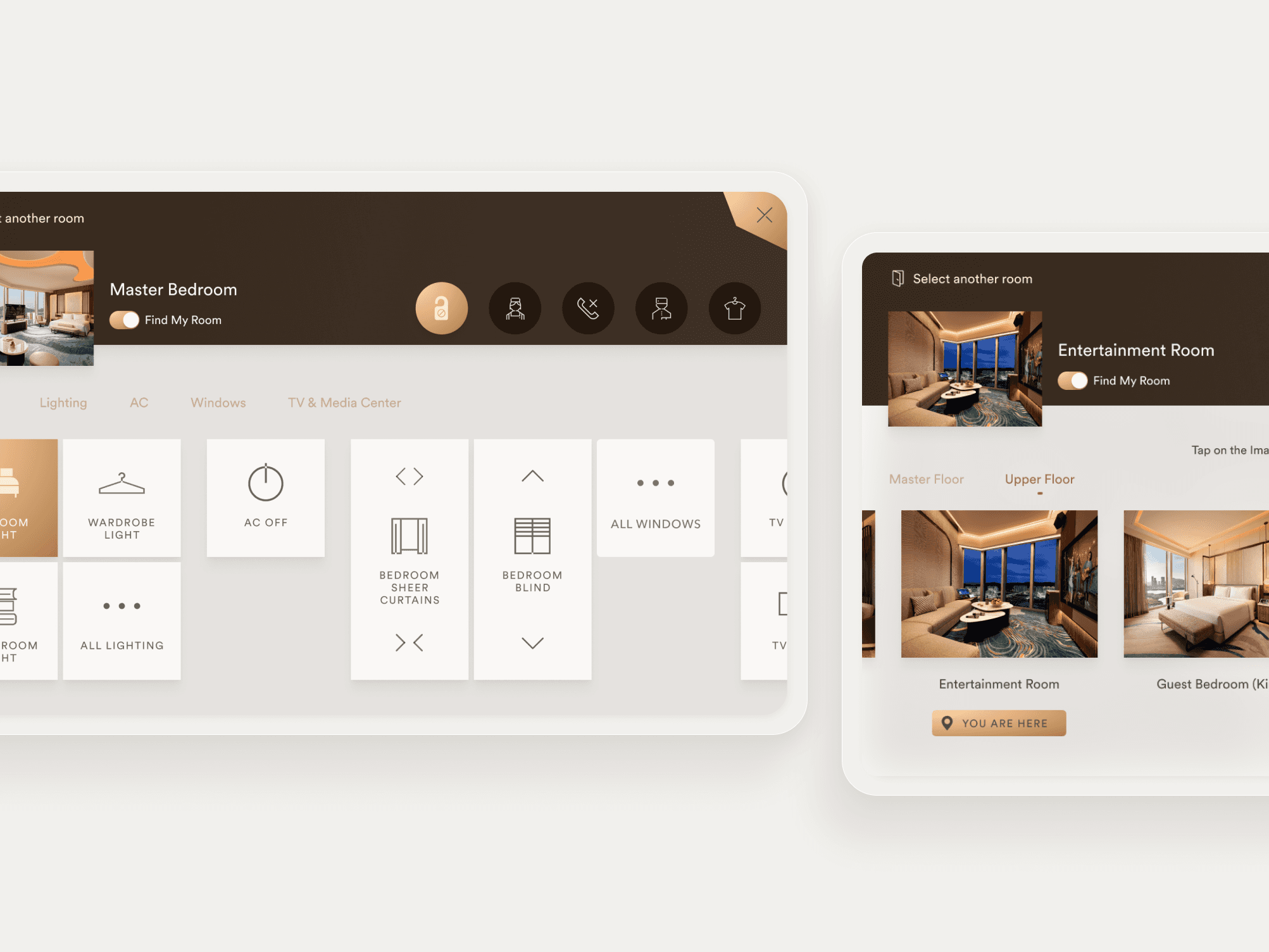
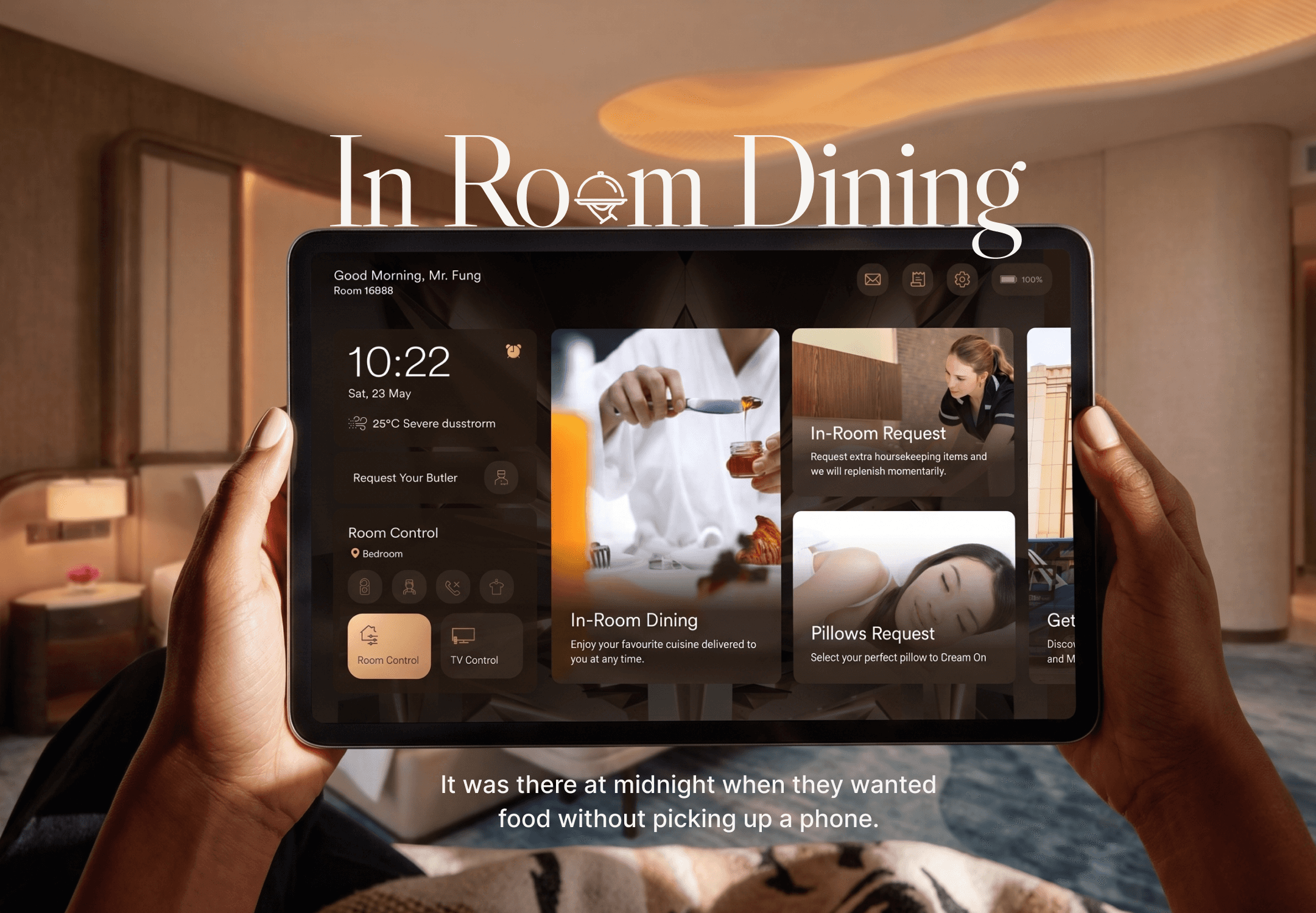
The brief started with room controls. What the product actually needed to become was the quiet centre of a guest's entire stay: in-room dining, item requests, property content, and yes, the room controls too. One product, built for five luxury properties.


Mapping the territory - Research
Getting this right meant understanding what guests actually needed in a luxury context, and where the existing tech was quietly failing them.
We ran a workshop with the people who know guests best — Front Desk, Butler, and Housekeeping. Guests often can't put their finger on what's bothering them until after they've checked out. The people on the floor deal with it every day. Their input shaped the feature set: some of it came straight from the business brief, some from a Butler mentioning, almost offhand, something guests always asked for that the app could easily handle.
We followed that up with user testing, to check our assumptions held before moving into high-fidelity design.

From the design workflows into the system work
Working with the UX lead, I mapped out the full user journey and built prototypes before committing to hi-fi. On the UI side, my job was making each property's interface feel like it actually belonged in that room.
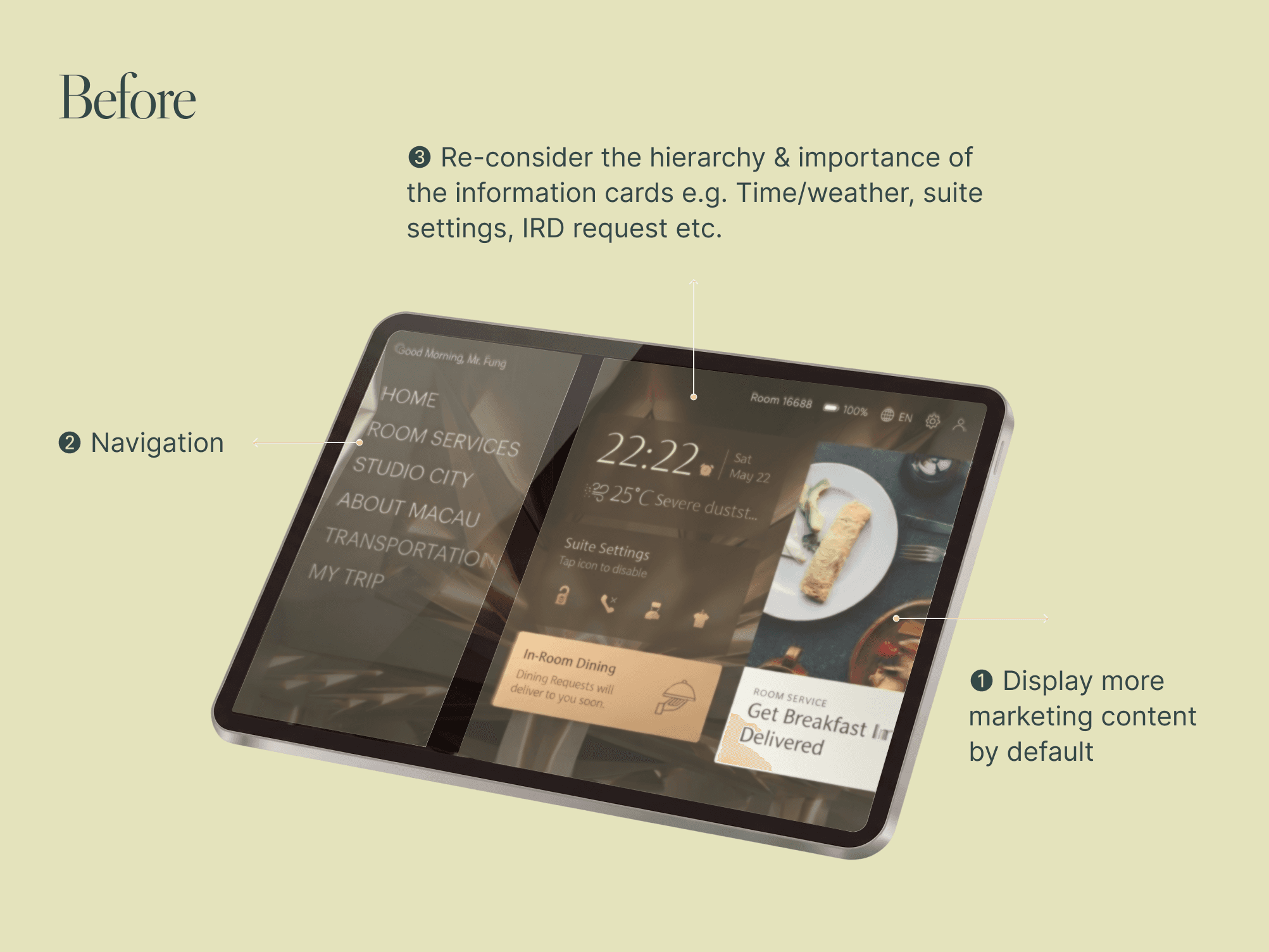
The work didn't stop at launch. We kept listening. A home screen navigation rework, the tray collection feature, room control improvements: each one came out of real feedback, and each went through the same loop: research, prototype, present, refine.
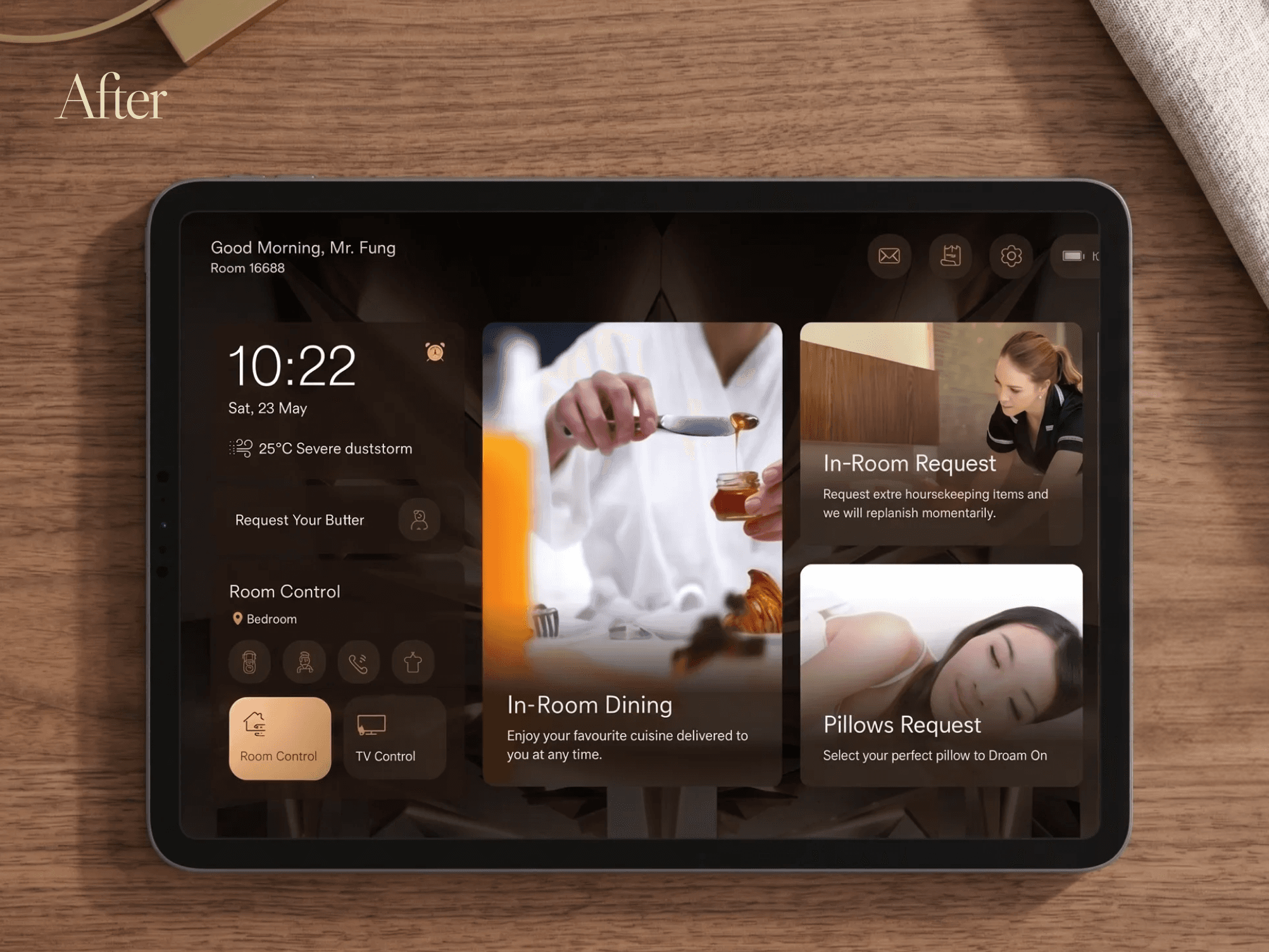
Scaling that across five properties meant rethinking the foundation. I led the move to a single unified design system: colour tokens and typography tokens mapped to each property's brand. A new launch no longer needs a redesign budget; a new colour theme is enough for the entire product to adapt. That took close collaboration with development, so the token layer became a genuine shared language between design and engineering.


Holding it together - Collaboration
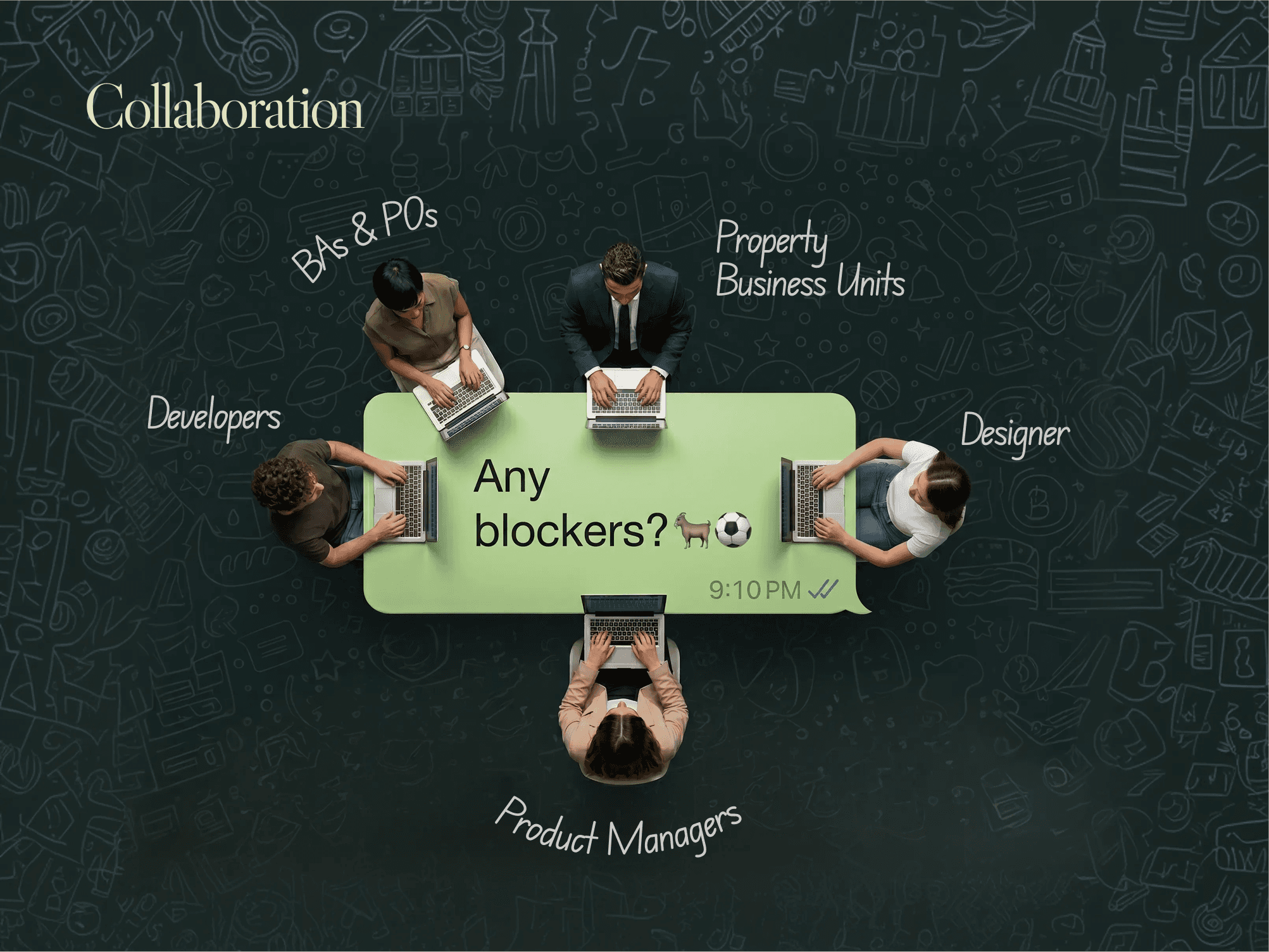
A product this complex doesn't get built in a design tool. Most of the real work happened in conversations, with product managers, BAs, POs, and property business units, each with their own requirements and priorities.

What I’d carry forward